


 November 28, 2023
Revocable living trusts are powerful—but they attract persistent myths. Here are the ten I hear most, with straight answers and practical steps you can use today.
Reality: The primary benefits—avoid probate, maintain privacy, and provide incapacity planning—apply at many asset levels. If you own a home or want someone to manage finances without court involvement if you’re ill, a trust is practical, not luxurious.
Reality: A standard revocable trust usually does not reduce federal estate or income taxes by itself. It’s a management and transfer tool. Tax‑focused trusts exist (e.g., ILITs, SLATs, charitable trusts), but those are irrevocable and purpose‑built.
Reality: You still need a pour‑over will to (1) nominate guardians for minor children and (2) funnel stray assets into the trust. A will is the safety net; the trust is the main engine.
Reality: Without funding, the trust doesn’t own anything and can’t avoid probate for those assets. Funding means recording deeds, retitling brokerage accounts, and aligning beneficiary designations. No funding, no benefit.
Reality: While you’re alive and well, you’re usually the trustee. You use your accounts and home as before. Banks and title companies typically rely on a certificate of trust, not your full document, for routine matters.
Reality: Properly funded trusts avoid probate for trust assets, but trustees still have duties: notices, prudent investment, paying valid debts and taxes, and making distributions. That’s administration, not courtroom litigation.
Reality: A revocable trust provides little or no protection from your own creditors while you’re alive because you retain control. Some irrevocable structures can provide protection under specific laws, but that’s different planning.
Reality: A well‑funded trust usually speeds things up, but the trustee still gathers information, pays bills, and follows your distribution instructions. “Fast” should not mean “sloppy.” Good records and communication matter.
Reality: Basis outcomes depend on design and titling. Revocable‑trust assets are typically includible in your taxable estate and receive a step‑up at your death; a second step‑up at the survivor’s death depends on ownership structure and state property law. Don’t rely on slogans—structure with intent.
Reality: Blended families, special‑needs beneficiaries, multiple properties, or business interests require tailored clauses. Use a state‑specific, lawyer‑crafted template and adjust for your facts—or consult counsel for complex needs.
Create the trust (state‑specific, lawyer‑drafted language).
Fund it: deeds recorded; brokerage retitled; personal property assigned.
Coordinate retirement and insurance beneficiary designations.
Sign a pour‑over will (guardians + safety net).
Store the binder with a certificate of trust and a simple asset list for your successor trustee.
Review after major life events or a move across state lines.
Build your modern trust now: Online Revocable Living Trust → Online Revocable Living Trust
Add a pour‑over will as backup: Online Last Will & Testament → Online Last Will and Testament
Related reading: Living Trust vs Will: Key Differences; How to Fund a Revocable Living Trust; Do You Need a Will If You Have a Living Trust?.
Prefer guided questions? Prepare your revocable living trust with our online document generator, then follow the steps to fund it.
Create your living trust online
Not everyone needs a living trust. As a general rule of thumb, you might conclude that you do not need a living trust where you are young and healthy, or can more easily transfer your assets (or some of them) by other probate avoidance methods, or where you do not own any (or very little) property of value. So, consider your own situation carefully before making any decision to create a living trust.
From Living Trust Kit, 2026 Fourth Edition — What Are Revocable Living Trusts?.
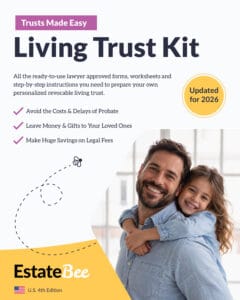
Prefer a downloadable guide? Plan your trustees and beneficiaries with forms for individuals and couples, a Living Trust Worksheet, and guidance on funding. The guide explains the transfers needed to place suitable assets in your trust.
U.S. guidance; not intended for Louisiana. Signing a trust does not itself transfer your assets.


Founded by lawyers in 2000, EstateBee is a leading international estate planning and asset protection publisher.


Hive Administrator
Founded by lawyers in 2000, EstateBee is a leading international estate planning and asset protection publisher.