


 February 28, 2025
A DIY living trust kit can be the right tool for a straightforward estate: a home, standard bank/brokerage accounts, predictable beneficiaries, and a desire to avoid probate with minimal friction. Success comes down to completeness and follow‑through: using a revocable living trust template correctly, funding it fully, and pairing it with a pour‑over will. This guide shows when a kit fits—and when to opt for counsel.
Simple asset mix: Primary residence, checking/savings, non‑retirement brokerage accounts, and household property.
Clear goals: Standard distributions to spouse/children, possibly with age‑based stages for minors.
No contested dynamics: Low risk of fights among heirs; no complex business interests.
With a well‑written kit, you’ll capture the essentials: trustee powers, successor‑trustee naming, distribution instructions, and pour‑over coordination.
1) Execute correctly. Sign and notarize where the kit instructs. Use the exact trust name and date consistently across all paperwork.
2) Fund the trust. Record a deed to trust for real estate; retitle brokerage accounts; execute an assignment of personal property; and coordinate beneficiary designations on retirement accounts and life insurance.
3) Keep a certificate of trust. Banks and title companies rely on it to verify trustee authority without reviewing the full document.
4) Pair with a pour‑over will. Your will catches unfunded assets and nominates guardians if you have minor children.
5) Organize your binder. Store deeds, account letters, and a funding checklist where your successor trustee can find them.
Blended families or custom staged/incentive distributions
High‑value or complex business interests (LLCs, S‑corps, restricted transfers)
Special‑needs planning or long‑term asset‑protection goals
Multi‑state real estate or tax‑sensitive strategies (credit shelter, QTIP, etc.)
A lawyer can tailor sub‑trusts, coordinate buy‑sell agreements, and handle nuanced tax or family issues that go beyond a standard kit.
Half‑funded trust: The biggest failure point. If assets aren’t retitled, probate reappears.
Wrong names: Inconsistent trust names/dates on deeds and accounts cause bank and title delays.
Mismatched beneficiaries: Old designations on life insurance or retirement plans can derail your intent.
Missing pour‑over will: Without it, stragglers outside the trust fall to intestacy or require extra court work.
When your facts are simple and your follow‑through is strong, a living trust kit gets you to a funded, functioning plan quickly. Your successor trustee can step in fast, your family skips court for trust‑titled assets, and your distributions happen according to your instructions—not the state’s defaults.
Set up your trust with a step‑by‑step kit: Living Trust Kit → Living Trust Kit
Prefer a guided online workflow? Online Revocable Living Trust → Online Revocable Living Trust
Add a guardianship safety net: Online Last Will & Testament → Online Last Will and Testament
Related reading: EstateBee Living Trust Kit: Documents and Steps; How to Fund a Revocable Living Trust; Online Estate Planning, Kit or Book? Compare Formats.
Prefer guided questions? Prepare your revocable living trust with our online document generator, then follow the steps to fund it.
Create your living trust online
Not everyone needs a living trust. As a general rule of thumb, you might conclude that you do not need a living trust where you are young and healthy, or can more easily transfer your assets (or some of them) by other probate avoidance methods, or where you do not own any (or very little) property of value. So, consider your own situation carefully before making any decision to create a living trust.
From Living Trust Kit, 2026 Fourth Edition — What Are Revocable Living Trusts?.
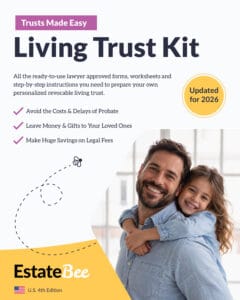
Prefer a downloadable guide? Plan your trustees and beneficiaries with forms for individuals and couples, a Living Trust Worksheet, and guidance on funding. The guide explains the transfers needed to place suitable assets in your trust.
U.S. guidance; not intended for Louisiana. Signing a trust does not itself transfer your assets.

Martin was an early pioneer of online estate planning and founded one of the world’s first online estate planning businesses in 2000.

CEO, EstateBee
Martin was an early pioneer of online estate planning and founded one of the world’s first online estate planning businesses in 2000.